
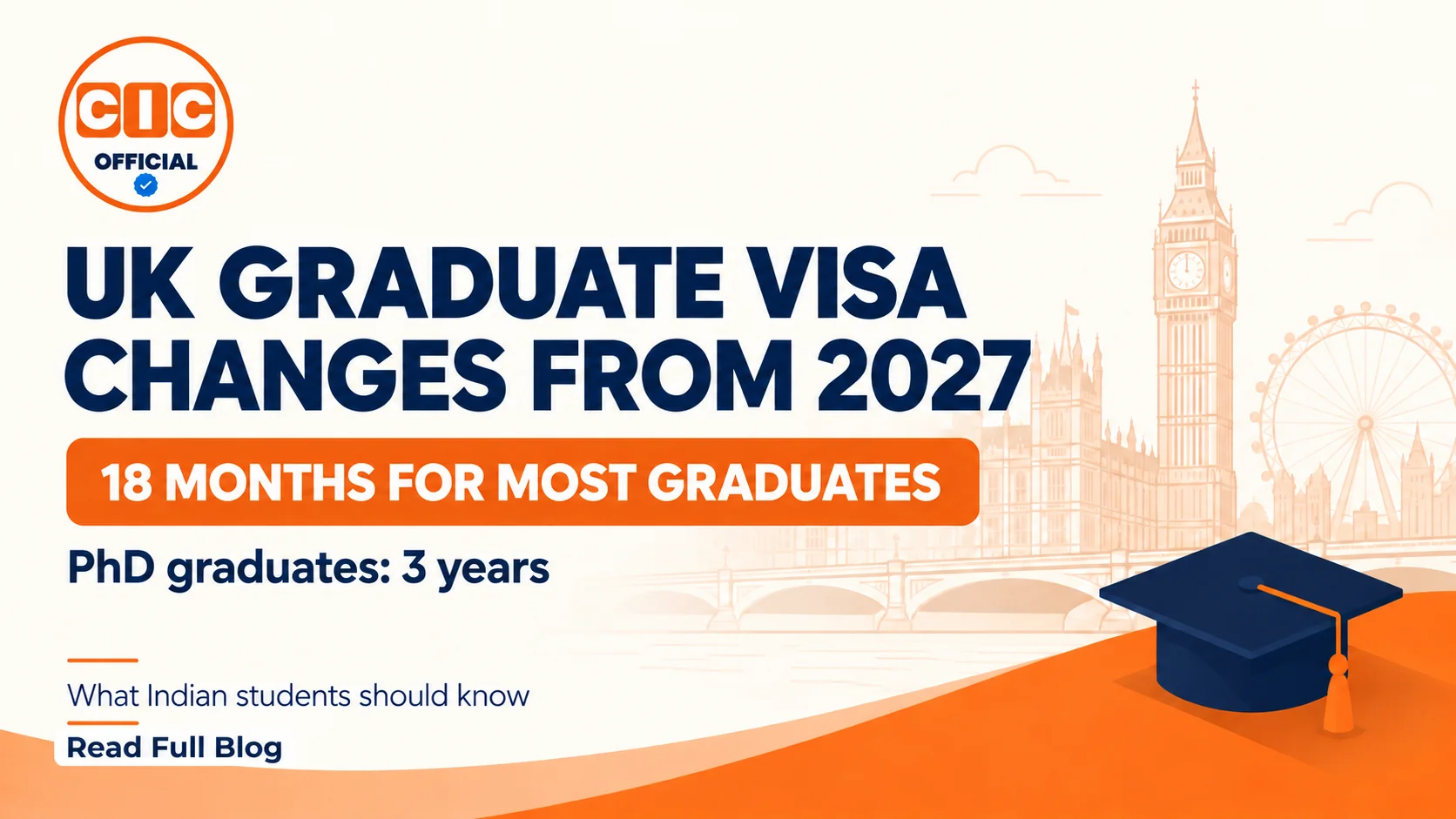
UK Graduate Visa Changes: What Indian Students Should Know for 2027
What are the UK Graduate Visa changes for 2027?
International students completing eligible UK courses should plan for a shorter post-study period. For Graduate visa applications submitted on or after 1 January 2027, the permission will last 18 months for most eligible graduates, including bachelor’s and master’s degree graduates. People who apply on or before 31 December 2026 will receive two years, if eligible. Graduates with a PhD or another doctoral qualification will continue to receive three years.
The key date is when you submit your Graduate visa application, not simply your course start date or graduation ceremony. Your university must first report your successful course completion to the Home Office, and you must apply while your Student visa remains valid and while you are in the UK.
What this means for Indian students?
The change affects Indian students in the same way as other international students: it shortens the time available after a bachelor’s or master’s degree to gain UK work experience, explore roles, and prepare a longer-term route. An 18-month window may make early planning more important, especially for students who hope to move into sponsored employment.
Before choosing a course, consider the likely graduation date, the application timing, your target industry, and whether employers in that field commonly sponsor eligible roles. Keep your CV, portfolio, references, and interview preparation current before your course ends. Do not treat the Graduate visa as a guaranteed route to settlement or sponsored work: it is temporary permission and does not itself lead to settlement.
Who can apply for the UK Graduate Route?
You may qualify if you are in the UK, currently have a Student visa (or the former Tier 4 General student permission), successfully completed an eligible UK course, and your university or other eligible provider has told the Home Office that you completed it. You must apply before your Student permission expires. The course and study requirements vary, so check the official eligibility rules for your specific qualification and study history.
The Graduate route is unsponsored. You do not need a job offer or employer sponsor to apply, and you may apply after your provider confirms your completion. You cannot apply from outside the UK.
Can UK graduates work in any job?
Graduate visa holders can generally work in most jobs, look for work, be self-employed, or do voluntary work. The main work restriction is professional sportsperson, including professional sports coaching. Unlike the Skilled Worker route, the Graduate route does not require a sponsored job or a qualifying salary just to hold the visa.
Graduate visa vs Skilled Worker visa
| Graduate Visa | Skilled Worker Visa |
|---|---|
| Unsponsored; no job offer is needed to apply | Requires an eligible job with an approved sponsor and a Certificate of Sponsorship |
| Temporary permission after eligible UK study | Work route based on an eligible sponsored role and salary rules |
| Usually 18 months for applications from 1 January 2027; three years for doctoral graduates | Length depends on the permission granted and current rules |
| Cannot be extended; you may switch to another route if eligible | Can be extended or updated if requirements continue to be met |
A Graduate visa can give you time to build UK work experience, but it does not guarantee that an employer will sponsor you. Skilled Worker eligibility depends on the role, sponsor, salary and other current requirements. Those requirements can change, so check them at the time you apply.
Can students switch from a Graduate visa to a Skilled Worker visa?
Yes, if they meet the Skilled Worker requirements. Typically, you need a job offer from a Home Office-approved employer, an eligible occupation, the required salary, and a Certificate of Sponsorship. The employer and role must meet the rules in force when you apply. You can apply to switch from inside the UK; follow the official instructions and do not travel outside the Common Travel Area while a switching application is pending, as this can affect it.
Will PhD graduates still get three years?
Yes. The three-year period for a PhD or other doctoral qualification remains in place under the announced change, including for applications from 1 January 2027. If a doctoral student completes a different, lower-level qualification instead, the applicable period may differ; check the rules that match the qualification actually completed.
What happens when the Graduate visa expires?
The Graduate visa cannot be extended. Before it ends, you must either qualify and apply for another visa route or leave the UK. Depending on your circumstances, possible routes may include Skilled Worker, another Student visa for further eligible study, Global Talent, or a family route. Each has separate eligibility requirements; do not assume that a route will be available automatically.
Plan your next step early
The change makes timing and career planning more important for students aiming to work in the UK after study. Review your likely application date, understand the work you want to pursue, and check current visa rules using official sources. A qualified adviser can help you assess your individual circumstances.
Considering study in the UK? CIC can help you explore course options and plan your application journey. Speak with a UK Study Visa Consultant for guidance tailored to your circumstances. This is general information, not legal advice or a guarantee of a visa outcome.
Frequently asked questions
How long will the UK Graduate visa remain valid from 2027?
For applications submitted on or after 1 January 2027, it will last 18 months for most eligible graduates. PhD and other doctoral graduates will continue to receive three years. Applications submitted by 31 December 2026 may receive two years, subject to eligibility.
Who can apply for the UK Graduate Route?
Eligible applicants must be in the UK, have or last have had Student or Tier 4 permission, complete an eligible course, and have their education provider report completion to the Home Office. Apply before your Student permission expires. Check GOV.UK for course and study-duration requirements.
How will the 18-month Graduate visa affect Indian students?
It gives eligible bachelor’s and master’s graduates six months less post-study time than the current two-year period. Students may need to start job searches and sponsorship planning earlier. It does not change eligibility based on nationality.
What is the difference between the Graduate visa and Skilled Worker visa?
The Graduate visa is an unsponsored, time-limited route after eligible study and allows broad work choices. Skilled Worker permission requires an eligible sponsored job and the applicable salary and sponsorship conditions. The Graduate visa cannot be extended, though eligible holders may switch routes.
Can UK graduates work in any job after completing their degree?
Generally, yes: Graduate visa holders may take most paid or unpaid work, including self-employment. They cannot work as professional sportspersons, including professional coaches.
Will PhD graduates continue to receive a three-year Graduate visa?
Yes, for a PhD or another qualifying doctoral award. The 18-month change applies to most other qualifications for applications from 1 January 2027.
Can students switch from a Graduate visa to a Skilled Worker visa?
Yes, if they meet the Skilled Worker requirements, including an eligible sponsored role, employer, and salary. Apply before the Graduate visa expires and follow the current GOV.UK switching instructions.
What options are available when the UK Graduate visa expires?
You must switch to another visa route for which you qualify or leave the UK. Potential routes include Skilled Worker, Student, Global Talent, or a family route, depending on your situation. The Graduate visa itself cannot be extended.
